Here's where you're supposed to go for this story: Every little thing.


12 years ago

Here's where you're supposed to go for this story: Every little thing.
Let's start this blog post by making it all about me: George Estreich, the guy who wrote this fantastic op-ed in the NYTimes, is a digital friend of mine. We've never met in person (not yet--we have plans to be on a panel together at a conference next year), but we email from time to time, and I try to keep up with what he writes.
Here's my review of his book, The Shape of the Eye, from back in December 2011.
And more importantly for today's blog post, here's the link to his op-ed, "A Child with Down Syndrome Keeps His Place at the Table."
You all have probably heard the story he's writing about. Friends have been posting it on Facebook, and my dad checked in with me last night to confirm that I knew about it. George gives the summary in his piece, but the super-short version is that a family with a five year old child with Down syndrome was eating at a restaurant where they regularly eat. A guy at the next table said, "Special needs children need to be special somewhere else." Then the waiter asked that guy and his party to leave.
It really is a story with a happy ending. Michael Garcia, the waiter, could have lost his job, but instead he's become a kind of celebrity. My dad told me he's regularly getting $50 tips these days--customers at the restaurant want to congratulate him for being so decent, which is encouraging.


All God's children gonna sit togetherI'm not a big advocate for God, but that line often comes to me--I find myself singing it in my head--because of the power of all of us sitting together at the table, and what that means.
All God's children gonna sit together one of these days
Halleluia
All God's children gonna sit together
All God's children gonna sit together one of these days
One of these days.
I haven't blogged for a while, so I thought I'd log back in. We're having a fairly leisurely morning because Maybelle has an ophthalmologist appointment at 10. So as she sits here listening to the Oklahoma soundtrack (currently on her favorite dance number, "The Farmer and the Cowman") and eating her breakfast, I thought I'd share the list I made of foods Maybelle will eat.
She's a picky eater. Picky might be a euphemism. She might be far worse than picky. BUT she is growing quite well, is healthy, sleeps well, has loads of energy, etc, so her pediatrician says don't worry about it--whatever she's eating, it's doing its job.
So here's what she'll eat, sort of in order of preference (although that's subject to change):
1. yogurt (Chobani Greek is her favorite)
2. O's and milk
3. ice cream (vanilla)
4. waffles
5. French toast
6. scrambled eggs
7. toast with jam
8. pancakes
9. applesauce
10. oatmeal (known around here as hot cereal)
11. cinnamon rolls (only the ones from Wildflour, and they only make them on Sundays)
12. bananas
13. sweet potatoes
14. granola
This morning she and I split three scrambled eggs and three pieces of toast, and then she ate a container and a half of peach yogurt.
That's it from here. No outrage to share just yet.
I've got a piece in the Charleston City Paper today about the refusal of House Republican leaders to reauthorize the Violence Against Women Act. If I'd decided to call my column "This sucks a monkey penis," this article would work.
There is no actual mention of monkey penises in the article, though.

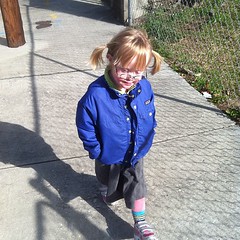 I'm reading Barbara Kingsolver's new novel Flight Behavior, and the main character's four-year-old son is having articulate conversations with an entomologist about the butterflies who have gathered on their property. As I read, I compare this little boy to Maybelle. She's not a person, at four, who can have this sort of conversation yet.
Let me be really honest. This isn't some sugar-coated narrative from me--I was sort of surprised to discover this about myself: I really am not bothered by this comparison between Maybelle and fictional Preston. I recognize it as a difference, not a deficit. I don't read and feel a loss--"Oh, I'm sorry Maybelle isn't like this!" Instead, I read and see a child who's different from Maybelle, in one of the millions of ways kids are different from each other.
This morning Maybelle was eating O's and milk ("Whoa! O's and milk!" she proclaimed happily as I brought it to her), and I watched as she scooted her bowl a tiny bit closer to herself, bringing it near the edge of the table so the spoon had less distance to travel (and less distance to drip milk on the table and her lap). "How cool," I thought. "Good observation and action, Maybelle."
We've had conversations this morning about her stuffed animals. She brought in a baby doll she hasn't played with in probably six months. "Oh, a baby!" I said. "No," she said, "Rainbow!" Right! She has another baby doll whose name is Baby. That doll's name is Rainbow. I'd forgotten. We went through and identified a whole host of creatures: Llama Llama (pronounced "llama mama"), Bollo, Bear, Monkey, Super Grover (pronounced "Super Booger"), Toto. I'm really happy to have these interactions with Maybelle.
This isn't a post about congratulating myself for working so hard to get to this place. I didn't work to get here. I would have bet money that I would be a person who didn't feel this way--who'd be bummed that my child wasn't going to go on to the Ivy League, who'd be constantly feeling disappointed as I compared my child with Down syndrome to typical kids. As it turns out, I'm fortunate enough that I don't feel that way. I get to enjoy her for the person she is. I'm grateful.
We might have fleas. We're itchy around here, all of us, and I think some of them might be living in the bed.
So I vacuumed. And let's be clear, I didn't do it well. But I did it. And I took all the stuff I vacuumed up and threw it away outside, so a vacuum container full of roiling fleas and flea eggs isn't growing new fleas in the corner.
I'm washing the sheets and comforter (which were also peed on--not by Maybelle) in very hot water, and I'm going to dry them in the dryer until they're untouchably hot.
I'm going to call Terminix tomorrow. We have a whole house bug contract, which means flea treatments are FREE. That was a good move back in the day! They'll come in and spray incredibly toxic chemicals all over the house. If anybody reading this has thoughts about using homeopathic remedies, all natural oils or something, those thoughts may be entirely valid--but I don't want to hear them. You tell a friend how unhinged Alison Piepmeier is, and let me be. I want the fleas dead.
Now I'm going to go eat my current favorite food: waffles with peanut butter (Jif, thank you very much, not some healthy peanut butter), syrup (Log Cabin), and bananas. Maybelle's having ice cream.
That is all.
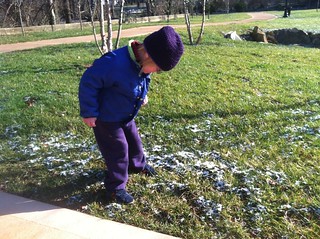 It's been flurrying for the last several days in Cookeville, where Maybelle and I are spending the remainder of our holiday vacation. Maybelle's a Charlestonian, so she's not that fond of snow. It's fairly cold, and it's not affiliated in any way with swimming, performing numbers from Oklahoma, or eating yogurt--her favorite activities. But it's her first snow! I felt it was important to get her out in it--to force her to interact with it and acknowledge its existence.
Claire, who comes from upstate New York, has suggested that we go sledding. This, she has said, is the way to make snow really fun, and she's asked several times whether I've had a chance to do it yet. So this morning I thought I should document what "snow" means in middle Tennessee, so that Claire can let go of this lovely and yet not really applicable notion.
I like to drink a cup of hot tap water. It's one of my favorite winter beverages. Amber has suggested that this makes me a bit like someone's grandma. In fact, it's a beverage that even Maybelle's Nonni rejects. But I truly enjoy it.
I'm drinking a cup of it right now.
It's like exactly the temperature of my body, so I can stay hydrated without getting chilly. It doesn't hurt my teeth. It has no flavor, no caffeine, no effect on my breath. It requires no effort to have a cup, and then another cup.
I'm not sure that I'm the marketing genius who's going to make this drink take off, but I'm surprised other people don't enjoy it as much as I do.
Far from the Tree is a challenging book. It's grim. The last chapter is about love, and Solomon has some beautiful things to say about love in the face of challenge, about the fact that challenges only make love stronger, more complex, more inexplicable. But the book as a whole isn't an upper. I guess this isn't surprising; as Solomon admits at the end, "For many years, my primary identity was as a historian of sadness. Pictures of despair are widely admired, and perfect bleakness is generally thought to reflect the integrity of the author. But when I've tried to write about happiness, I've had an inverse relation, which is that you cannot write about it without seeming shallow."
I've been reading the book during a challenging period in my own life, so that's affected what I've seen, of course. And I've been reading through my own lens, the lens of a person for whom Down syndrome isn't a "disease" and certainly isn't a tragedy--it's simply one of many characteristics that helps make my daughter the person she is in the world. So this is a book that's triggered a lot of tension in me as I've read.
Thinking about the book as a whole, it strikes me less as a book about love and more as a book about the terrible suffering that happens in so many families, for so many different reasons. Every chapter documents all kinds of suffering--children who are neglected despite their mothers' best efforts because they were conceived when the mother was raped, families where the parents are exquisitely loving but that doesn't alter the destructive effects of schizophrenia on one of the children, school systems that refuse to allow a transgender child to be the person s/he is. Every chapter has glimpses of happiness, of course, but just glimpses. It's a book that leaves me feeling sad, feeling that there's a great deal of work still to be done.
And this may be Solomon's honest assessment of the world he's extensively researched. I don't know that I can offer this as a critique of the book specifically. Solomon has done his work: he's made long-term relationships with the families he's interviewed. The breadth of his conversations are impressive. He mentions talking to a family when a child was young, and then again when the child was in high school, and then interviewing the child in college: I've got nothing like this in my own research experience. So I'm not suggesting that Solomon hasn't done his work.
I'd like more hope, though. And this is related to my earlier thoughts on the book. I have a friend who has a daughter who exhibits some characteristics that might be related to autism, and under no circumstances should this friend read the book. This book should be kept far, far away from her. I'm not kidding. If you're a parent with potential anxieties about autism, this book will only trigger all your fear and misery. You get a couple of pages of happiness about neurodiversity, and the rest of the chapter is about how miserable and difficult life is.
I get that it's important that we allow all parents to express the complexity of their emotions. Expecting parents of kids with disabilities to adhere to a party line of "everything's great!" is oppressive, of course, and reductive. But I feel that we get plenty of narratives in the world that portray the grief and difficulty of parenting a kid with a disability (most parents' memoirs, for instance, offer more of the grief than of the recognition that things are pretty good).
He portrays a world in which more social supports would be useful--and I agree with this. He advocates for community, for the formation of the sorts of families and societies that will support each of us--and I agree with this, too. He's also a big believer in reproductive rights. So most of the premises of the book are premises I agree with. And if you're a parent who is miserable, this book will probably be extremely comforting, because it's a book that will let you know that there are others struggling like you--others who aren't bad parents but who are human beings with a range of emotional reactions.
He also claims several times that diversity is a strength. Near the end of the book he acknowledges that research shows that inclusion in society helps everybody: "Building a compassionate society benefits not only those who are newly tolerated, but also those who who are newly tolerating." And yet I didn't finish the book with this as my overarching take-away. My somewhat snarky take-away is, "Wow, parents of kids with challenging identities are such heroes. Their lives sure are hard." Since I'm thinking a lot about the ways we encourage prenatal testing, and the ways in which we make termination of pregnancies the intuitively obvious "solution" to differences identified in utero, I found the book troubling.
This is a book I'll return to. Solomon has enough solid ideas that I suspect I'll quote him. But it's not a book I'm going to suggest my friends rush out to read.
As y'all know, I write a monthly column for Charleston's City Paper. I've been doing it since July, I guess. It's been fun, and I continually get feedback on it. For instance, Conseula and I had lunch today at Jack's, and as I was checking out, the cashier said, "I love your column!"
Every time I write a column, though, it's just labeled "Guest Column." I'm a regular monthly columnist, so it's time that my column has a name. And I am terrible at coming up with names. Just terrible. So I emailed my editor to ask him for suggestions.
He wrote,
Hmm.
Give me some themes to work with. Like say three words.
All I can come up with now is: On a Gender Bender. And I don't think that even remotely works.
Ha! But that’s better than anything I’d come up with!
Themes: whatever Alison wants to talk about. Feminism. Sexism sucks. Tearing down the white supremacist heterosexist patriarchy. Ovaries are awesome.
Ooh. Ovaries Are Awesome. Interesting.
 Then this afternoon, I was sharing this dilemma with Amber. During that conversation, she happened to notice some pictures on my desk--pictures that Catherine, Trey, and I drew over the weekend. Pictures of monkey penises. She was sort of shocked. I told her that sometimes when things suck really badly, they suck a monkey penis. And that's what these pictures were meant to capture. (I've made it really small here so perhaps you won't be as distressed as Amber was.)
Things That Suck a Monkey Penis.
I talked with my parents this morning and told my mom she doesn't seem nearly old enough to have a forty year old daughter. And yet, she does! Here I am. I made it to forty.
When the brain tumor was diagnosed three years ago (or, precisely, two years and 352 days ago), I wondered if I'd make it to forty. I'm really happy--and grateful--to be here. Maybelle is four--another thing I wondered: would I see my daughter this old? My memories of childhood start around four, so I'm delighted that I'm part of Maybelle's life right now.
And my health is good! This isn't the blog post announcing that I'm on the decline. But I thought I'd be sort of honest here and share what I don't often share in person: this birthday is important to me at least in part because it means I'm still alive. My mortality is part of my consciousness a lot more than I let on.
Last night I got into bed and got to nestle next to a sleeping Maybelle (have I mentioned that we're doing the family bed these days? We are. Snuggle-bugging all night long). I got to smell her lavender-shampoo hair, and her kind of funky breath, which I love. I'm so grateful for her little warm body, and for her wide eyes and smile in the morning. "First potty, then Lela and the girls*," she said this morning. Excellent way to start the day.
She also wished me a happy birthday, when I prompted her.
I'm grateful for having such a powerful circle of friends. My best friends in the world were here for my birthday weekend. (We didn't get a picture together! How is this possible?) I've never had that happen before, and it was such a gift. Their different strengths and talents were on display, from excellent questions to savvy reframing of difficult situations to warmth and teasing. I felt like I was in the middle of...what...only goofy metaphors are coming to mind: a vortex, a circle of uplift (Eliza: come up with a better metaphor!). And all of them love Maybelle, who can name them all and is perfectly happy to request that they pick her up, put her on their shoulders, take her to the potty, etc.
I'm grateful for Uncle Trey (his official name now, although that might be a bit creepy since he's my brother, not my uncle), who is attempting to overcome his fear of poo atoms and wipe Maybelle's bottom.
And let me tell you how great my family is: great! I have a reliable source of unconditional love from Aaron and Mary, and my mom and dad.
With each new decade, I'm realizing more and more that life is a combination of things that are incredibly challenging and things that are wonderful. They're both happening all the time, at the same time. So today I'm going to try to focus on the wonderful stuff. I'm wearing my "Han shot first" shirt. I'm eating Hershey's candy cane kisses. I'm going to have dinner with loved ones tonight and then watch Star Wars. And I'm forty!
*Lela and the girls are her hand-me-down Groovy Girls. Lela was initially her favorite, and the other three are "the girls." Each one's name is "girl." A bit like Larry, his brother Darryl, and his other brother Darryl.
The word midget, first coined to describe LPs [little people] displayed as curiosities, and drawn from the midge, an annoying small insect, is now considered deeply offensive--the LP equivalent of nigger or spic or faggot--and many mothers told me how much they feared that their child would be subject to this appellation. But the general population doesn't know that midget is an insult (126).The general population doesn't know, but he knows and he informs them. Why, then, doesn't he know the same fact about "mental retardation"?
[Emily Kingsley] told me mournfully, "The primary job of most parents is to make their kids think they can do anything; my primary job is to take him down. Reduced to a sentence, it's 'You're not smart enough to do what you want to do.' Do you know how much I hate having to say that?" (176)
 |
| Two people not looking mournful. |
I'm still reading Andrew Solomon's Far from the Tree. I haven't finished it yet--indeed, I'm only on page 95 out of 962 pages (!!)--but I'm finding it quite thought-provoking. For instance, here's a great quote about parenthood:
Loving our own children is an exercise for the imagination.And this one:
It is always both essential and impossible to tease apart the difference between the parents' wanting to spare the child suffering and the parents' wanting to spare themselves suffering.I'll blog here in a substantive way when I've finished the book. I can already tell that Andrew Solomon is going to be quoted at least once or twice in my book.

Starting on November 18, our local paper has been running articles about rape on the College of Charleston campus. The Nov. 18 article focused on an alleged gang rape of a female athlete by a group of male athletes. She dropped out of school in the aftermath. They did not. Here's my response in the City Paper.
And in case you want some of the other stories, here are the ones from the Post & Courier:
Trey and I:
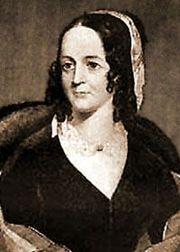
Sarah Josepha Hale should be on a t-shirt. If she's already on a t-shirt, someone should get that for me for a present. Of course she's got some problems--everybody does, and when you're a feminist scholar studying folks, those problems become apparent. But she was an incredibly influential woman in the 19th century, and it's because of her that Thanksgiving is a national holiday.
For 25 years, she wrote letters to the Presidents. She was like, "Listen, y'all, July 4 is a great holiday, but it's the only one we've got. You know that it would help our national unity if we had one more, at a different time of year, that has symbolic connection to the founding of our country and all that." She said, "You know that everybody loves turkey, and people need an excuse to eat a ridiculous amount of pie. So come on."
Because she was the editor of Godey's Ladies Book, a magazine that was so famous that it makes famous things today look puny by comparison, people paid some attention to her. And in 1863, Abraham Lincoln was like, "Dude, that SJH has a good idea. This Civil War's got everybody down, and pumpkin consumption is on the decline. The sweet potato lobby has been pushing for more support. So what the hell: let's make Thanksgiving a national holiday, on the fourth Thursday of November every year."
And here we are: celebrating Thanksgiving, but most of us not offering the tiniest thought to the woman who made it happen, Sarah Josepha Hale. Just about every year I draw people's attention to her, and yet I haven't generated the kind of viral attention that SJH needs. So tell your dining companions about her. She got us all a day off and a patriotic opportunity to eat pecan pie (and celebrate the eugenic efforts to rid the country of its indigenous population, but we'll put that aside for the moment).
Hurray, Sarah Josepha Hale!
This morning Uncle Trey, Maybelle, and I are heading to Tennessee to spend the holiday with Nonni, Poppi, Uncle Aaron, and Aunt Mary. Biffle is staying here. He needs a break, some true down time. I might have been suspicious of this, but two weeks ago I was at the National Women's Studies Association Conference for five days--five days alone in a big, luxurious hotel room. Alone. It felt like an amazing retreat. So I endorse Biffle having a retreat of his own. Plus, holidays are often a weird combination of excitement and dread, connection and tension, happiness and serious depression (as was the case for me last Christmas). If Biffle wants to sit this one out, right on.
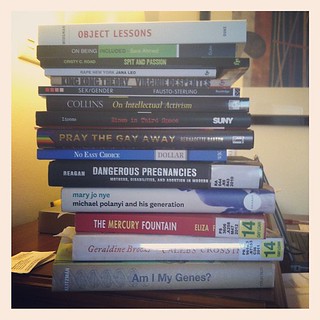 Yesterday I bought nine books.
I came to Oakland with six books. I read two on the plane, and wanted to be sure I had options for what to read here, and on the way home. Plus, I needed books to help me complete my presentation, which is this afternoon.
That means that when I pack tomorrow to leave, I'll have to somehow fit fifteen books into my suitcase.
I'm not allowed to buy any books today.
